Commercial Lighting MELBOURNE
Your local experts in Commercial Lighting
Commercial lighting is not a one-size-fits-all proposition. The right lighting for a retail shop is different from a warehouse, which is different again from a professional office or a medical practice. Get it right and your space works better, your energy bills are lower, and your staff and customers notice. Get it wrong and you’re paying to fix it twice.
We carry out commercial lighting installations and upgrades for Melbourne businesses across all sectors — LED office and retail lighting, warehouse high-bay installations, emergency and exit lighting compliance, and commercial exterior lighting. Licensed, certified, and fully documented on completion. Based in Melbourne’s Western suburbs, servicing all of Melbourne.
Emergency and exit lighting, what Melbourne businesses need to know.
Emergency lighting and exit signs are mandatory for all commercial tenancies in Victoria under Australian Standard AS 2293 and the National Construction Code. They must be installed before an occupation certificate is issued, tested regularly, and maintained with a compliance logbook. Non-compliance creates liability — in the event of an emergency on your premises, failed emergency lighting is a significant legal exposure.
We supply and install emergency lighting and exit signs for commercial tenancies across Melbourne — including new installations for fit-outs, replacements for failed or end-of-life units, and AS 2293 compliance testing and logbook maintenance for existing systems. Every installation is certified and documented on completion.
What’s included in a Rincon Electrical commercial lighting installation.
Every commercial lighting installation starts with an understanding of your environment and requirements. For LED upgrades, we assess your existing fittings, circuit capacity, and any specific lux level or colour temperature requirements for your industry before specifying the replacement fittings. For emergency lighting, we identify all required locations under AS 2293 before any hardware is ordered.
Installation includes supply and installation of all specified fittings, connection to existing circuits or new circuit installation where required, dimmer and control system installation where specified, full testing of all fittings before we leave, emergency lighting battery and function testing to AS 2293, compliance certification and logbook entry for emergency systems, and a Certificate of Electrical Safety on completion.
Commercial lighting for Melbourne businesses across all sectors.
Different commercial environments have different lighting requirements — lux levels, colour temperature, IP ratings, and compliance obligations vary significantly by industry and space type. We design and install commercial lighting for the specific demands of your environment, not a generic one-size-fits-all specification.
Our commercial lighting clients include professional offices and co-working spaces, retail shops and showrooms, warehouses and distribution centres, medical and allied health practices, childcare centres and schools, hospitality venues, food production and commercial kitchen environments, and commercial property owners managing multi-tenancy buildings. We carry out both new installations and upgrades to existing systems.
What a commercial lighting upgrade actually delivers:
- Energy savings — commercial LED fittings use 50–75% less electricity than fluorescent and halogen equivalents; for a typical Melbourne office or warehouse, this translates to thousands of dollars per year.
- Lower maintenance costs — LED fittings last 50,000+ hours versus 8,000–15,000 for fluorescent tubes; fewer replacements, less time with maintenance contractors on site.
- Better working environment — well-designed LED lighting at the correct lux level and colour temperature reduces eye strain, improves concentration, and contributes to staff wellbeing and productivity.
- Retail sales performance — correctly designed retail display lighting increases product visibility and dwell time; lighting quality directly influences purchase decisions.
- Government incentives — Victorian energy efficiency programs have been available for commercial LED upgrades; a licensed installation with documentation is required to access them.
Electrician

Service Areas
MELBOURNE Commercial Services
Why we are Melbourne’s experts.
With over 40 years of experience, we specialise in transforming Melbourne homes and businesses with custom-made window and door solutions. Our expertise covers the.
Have questions? Speak to our team.
Get a Free QuoteTrusted by Melbourne
Homeowners & Businesses
5.0
Great install, brilliant results!
Aymen and the team from Rincon Electrical came out to our house in Seaholme/Altona and installed an IXL heat lamp in our bathroom as you can see from this photo.
Vida Airbnb

5.0
Fantastic service, highly recommend them!
Aymen and his team from Rincon Electrical installed 6 lights in our newly built property. Their service was fantastic. Prompt response to our inquiry, on time for their booking and professional work. I would highly recommend and will have them back for any future electrical work.
Trenton Root
5.0
Professional, quick, and always follows up!
Aymen and his team did a wonderful job changing faulty switchboard switches. He followed up the next day and 15 days later to make sure everything was working. Very professional, quick to respond. Have more work lined up!
Karthik M
5.0
Professional, diligent, and friendly!
Professional, diligent, and friendly — top-notch for commercial and residential work. Their OHS management, attention to safety, and quality on 3-phase systems and switchboards is truly impressive. Highly recommended!
Mick
5.0
Spotless work, outstanding quality every time!
Professional, efficient, and takes real pride in their craft. Arrived on time, explained everything clearly, and left the work area spotless. Outstanding workmanship — neat, safe, and done right the first time. Highly recommend!
toby hickmott
5.0
Rare to find someone this professional!
Aymen from Rincon Electrical was absolutely outstanding — fast, efficient, and went the extra mile. He was incredibly methodical and communicative, explaining each step so we felt completely confident. It's rare to find someone so professional and detail-oriented. Highly recommend!
Cris A
5.0
Aymen was an absolute life saver!
Aymen was a life saver. He turned up on a Saturday and spent around 4 hours on site installing our Tesla wall charger. It was a harder install than expected and he and his apprentice nailed it. Very happy with their work and would recommend them to all.
Mathew Munro
5.0
Precision, quality, and top-notch workmanship!
Aymen and Leo recently completed a large job at my home — 70+ downlights, 8 dimmers, relocating 8 switches, and new GPOs. The results were outstanding, completed with precision, great attention to detail, and within the agreed timeframe. The workmanship is truly top-notch. Highly recommended!
Elinora Jain
5.0
Flexible, reliable, and highly recommended!
Excellent service and will be using Rincon Electrical again, they're flexible and reliable and I'm happy with the work carried out. New ceiling fans in bedrooms installed and charged over exhaust fan heater light. Highly recommended.
kyran
5.0
Above and beyond every expectation!
Rincon Electrical did a great job installing additional power points for our new house and our split system air conditioning. Aymen and Leo were professional, punctual, and easy to deal with throughout the job, especially working in this hot summer, they went above and beyond expectations to get the job done right.
Rik Jinny
5.0
I would certainly use him again.
I hired Aymen from Rincon Electrical to do a Compliance Check on my units. He was very communicative and went out of his way to help me out with other issues. I found Aymen to be kind and generous.
Marlene Galea
5.0
Really appreciate the great service couldn’t be happier.
Massive thanks to the team from Rincon for installing the new air cons at our place in Truganina for the upcoming summer. The boys were super friendly, worked efficiently, and left the place tidy.
Noah Manesh
5.0
Will use Rincon again!
Rincon came out today to do some electrical work for us. We were very impressed with the exceptional professionalism and quality workmanship of a job well done. There is nothing better than the satisfaction one can get from quality customer service received.
Charlie Zampaglione
5.0
Highly professional and reliable electrician in Melbourne.
The work was completed on time, with great attention to detail and safety. Excellent communication and very reasonable pricing. I would highly recommend their services.
Habibur Rahman
Commercial Lighting FAQ
Your Commercial Lighting questions answered.
Is emergency lighting required for commercial premises in Victoria?
Yes. Emergency lighting and exit signs are mandatory for all commercial tenancies under Australian Standard AS 2293 and the National Construction Code. They must be installed and certified before an occupation certificate is issued for a new tenancy or fit-out, and must be maintained and tested at regular intervals. Non-compliance creates legal liability and can delay occupation. We install, certify, and maintain emergency lighting systems across Melbourne.
How much can my business save by switching to LED lighting?
Commercial LED fittings typically use 50–75% less electricity than fluorescent and halogen equivalents. For a Melbourne office with 40 fluorescent fittings running 10 hours per day, switching to LED can reduce lighting energy costs by $2,000 to $4,000 per year depending on your electricity tariff. Warehouse high-bay LED upgrades from metal halide can produce even greater savings. We can provide an energy savings estimate as part of a commercial lighting assessment.
Can you replace fluorescent tubes with LED in an existing commercial installation?
Yes. In many cases, existing fluorescent fittings can be retrofitted with LED tubes or replacement LED panels on the existing circuit — reducing the cost of the upgrade compared to a full fitting replacement. We assess your existing fittings and wiring before recommending the most cost-effective LED upgrade approach for your specific installation.
What is the right lighting level for a commercial office?
Australian Standard AS 1680 specifies minimum lux levels for commercial environments. For a general office workspace, the minimum recommended level is 320 lux at desk height, with 400 lux recommended for tasks requiring sustained concentration. For reception areas, corridors, and meeting rooms, different lux levels apply. We assess your existing lighting levels and design the LED upgrade to meet or exceed the AS 1680 recommendations for your specific workspace.
Do you design and install lighting for retail displays and showrooms?
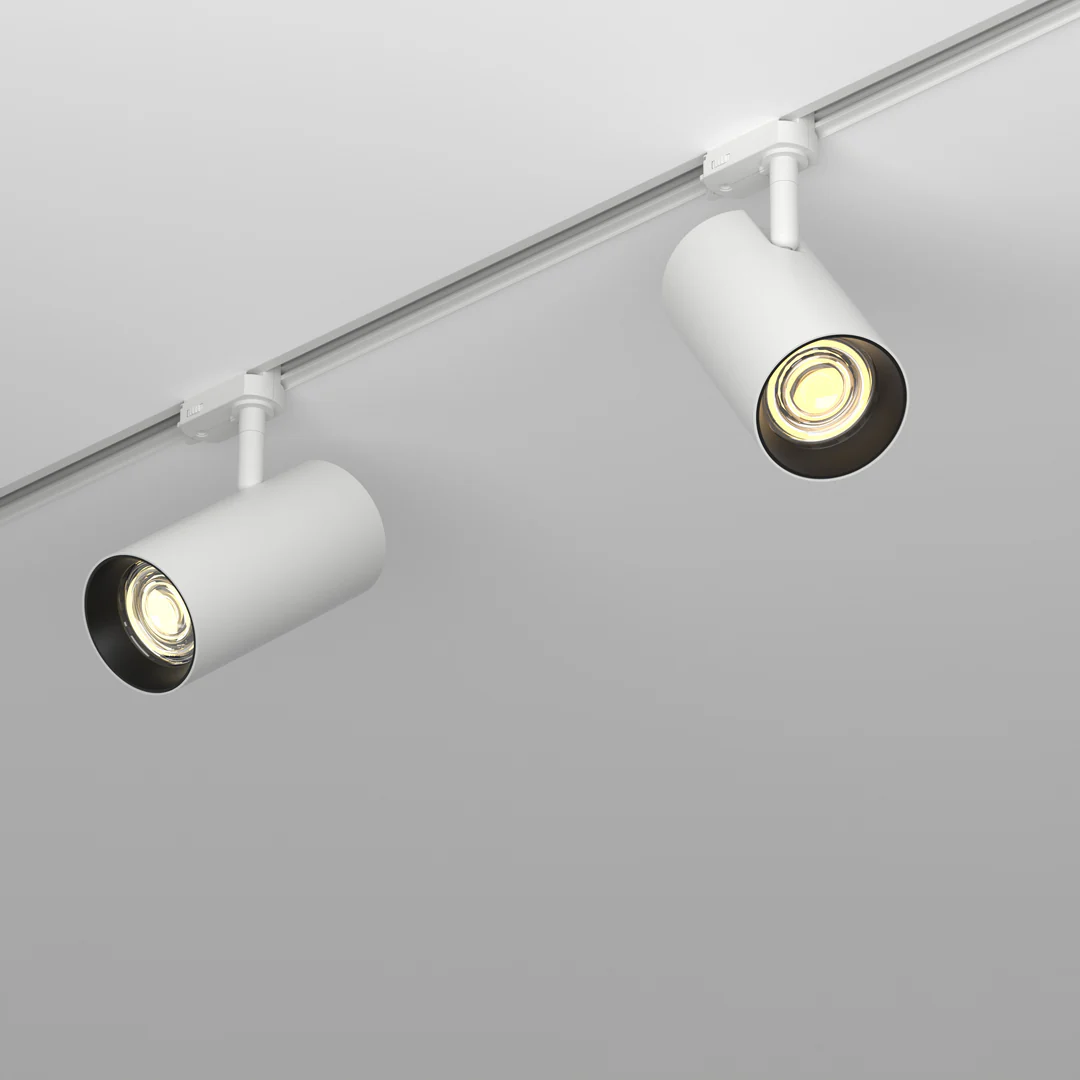
Yes. Retail and showroom lighting is a specialist area — the lighting quality directly influences how products are perceived and whether customers purchase. We install track lighting, LED strip, adjustable display downlights, and feature lighting for retail environments, working to your display layout and product requirements. We advise on colour temperature and CRI (colour rendering index) to ensure your products are presented in the best light.
What lighting is required for a warehouse or industrial premises?
Warehouse lighting must meet the minimum lux levels specified in AS 1680 for the tasks being performed — general storage areas typically require 80–160 lux, picking and packing areas require 160–320 lux, and quality inspection areas may require 500 lux or more. LED high-bay fittings are the standard for warehouse environments — they provide high lumen output, long lifespan, and significant energy savings over metal halide alternatives. We carry out warehouse lighting assessments and full LED high-bay installations.
Can you install smart lighting controls for commercial premises?
Yes. We install occupancy sensors, daylight harvesting controls, smart dimming systems, and programmable lighting schedules for commercial energy management. Smart lighting controls can reduce commercial lighting energy consumption by a further 20–40% on top of the savings from LED fittings alone, by ensuring lights are only on when and where they’re needed.
