Commercial EV Charging Infrastructure MELBOURNE
Your local experts in Commercial EV Charging Infrastructure
Commercial EV charging is no longer a nice-to-have. Fleet operators are electrifying. Tenants are expecting charging as a building amenity. Customers are choosing venues with charging over those without. And commercial properties without EV infrastructure are already starting to feel it in occupancy and asset value.
We design and install commercial EV charging infrastructure for Melbourne businesses of all sizes — from a single staff charging bay in a small office carpark to a multi-bay smart charging system for a commercial building or fleet depot. Load assessment, switchboard capacity, dedicated circuits, charger hardware, smart management systems, and all compliance documentation — handled end to end. Based in Melbourne’s Western suburbs, servicing all of Melbourne.
What’s included in a Rincon Electrical commercial EV charging installation.
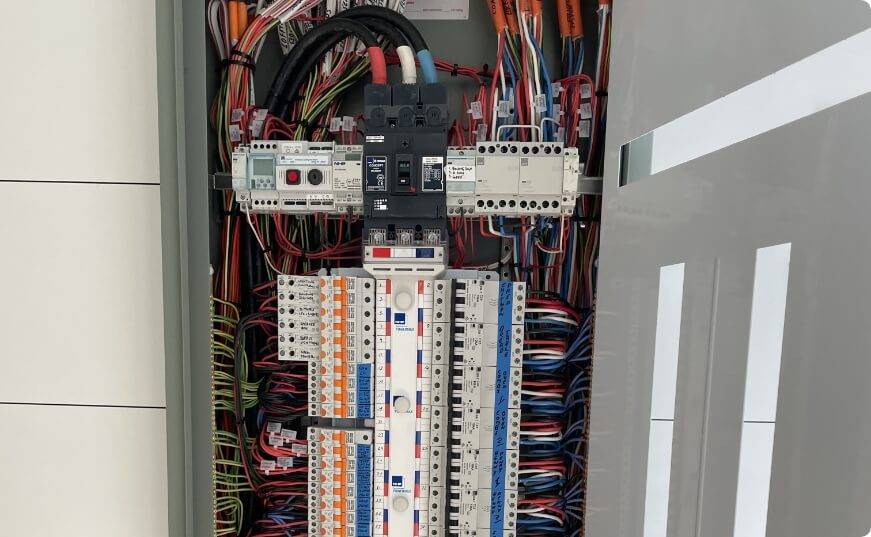
Every commercial EV charging installation begins with a load assessment — we review your existing electrical infrastructure, your planned charger count and user type, and your switchboard capacity before any hardware is specified. Getting the electrical design right at this stage determines whether the system performs reliably as usage grows.
Installation covers switchboard capacity assessment and upgrade where required, dedicated circuits from the switchboard to each charging bay, supply and installation of charging hardware, smart charging management system configuration, sub-metering or billing integration where required, all compliance testing and documentation, and a handover walkthrough with your facilities team. We coordinate with your commercial property manager or strata committee where needed.
Commercial EV charging clients we work with across Melbourne.
Commercial EV charging requirements vary significantly by business type. A fleet operator needs reliable overnight charging at the lowest cost per kWh. A commercial landlord needs scalable infrastructure that attracts and retains tenants. A retail centre needs customer-facing chargers that increase dwell time. We design around the specific use case, not a one-size-fits-all product.
Our commercial EV charging clients include commercial fleet operators transitioning to electric vehicles, office building and commercial property owners adding EV charging as a tenant amenity, retail centres and destination venues installing customer charging, strata committees and property managers specifying EV infrastructure for residential and mixed-use buildings, hospitality operators adding EV charging as a guest facility, and commercial developers building EV-ready infrastructure into new developments from the start.
Why EV charging infrastructure is a business investment:
- Tenant attraction and retention — commercial tenants with EV-driving staff increasingly expect charging as a building amenity; properties without it are at a disadvantage in a competitive leasing market.
- Fleet cost reduction — workplace charging at off-peak electricity rates is significantly cheaper than public fast charging; fleet operators running EVs need on-site charging to make the economics work.
- Government incentives — Victorian government programs supporting commercial EV charging infrastructure are available; a licensed installation with correct documentation is required to access them.
- Customer dwell time — retail and hospitality venues with EV charging report increased dwell time and spend from EV-driving customers who choose venues offering charging over those that don't.
- Future-proofing — installing EV-ready conduit and switchboard capacity now is significantly cheaper than retrofitting when demand arrives; smart infrastructure design accommodates growth without full reinstalls.
Electrician


Service Areas
MELBOURNE Commercial Services
Why we are Melbourne’s experts.
With over 40 years of experience, we specialise in transforming Melbourne homes and businesses with custom-made window and door solutions. Our expertise covers the.



Have questions? Speak to our team.
Get a Free QuoteTrusted by Melbourne
Homeowners & Businesses
5.0
Great install, brilliant results!
Aymen and the team from Rincon Electrical came out to our house in Seaholme/Altona and installed an IXL heat lamp in our bathroom as you can see from this photo.
Vida Airbnb

5.0
Fantastic service, highly recommend them!
Aymen and his team from Rincon Electrical installed 6 lights in our newly built property. Their service was fantastic. Prompt response to our inquiry, on time for their booking and professional work. I would highly recommend and will have them back for any future electrical work.
Trenton Root
5.0
Professional, quick, and always follows up!
Aymen and his team did a wonderful job changing faulty switchboard switches. He followed up the next day and 15 days later to make sure everything was working. Very professional, quick to respond. Have more work lined up!
Karthik M
5.0
Professional, diligent, and friendly!
Professional, diligent, and friendly — top-notch for commercial and residential work. Their OHS management, attention to safety, and quality on 3-phase systems and switchboards is truly impressive. Highly recommended!
Mick
5.0
Spotless work, outstanding quality every time!
Professional, efficient, and takes real pride in their craft. Arrived on time, explained everything clearly, and left the work area spotless. Outstanding workmanship — neat, safe, and done right the first time. Highly recommend!
toby hickmott
5.0
Rare to find someone this professional!
Aymen from Rincon Electrical was absolutely outstanding — fast, efficient, and went the extra mile. He was incredibly methodical and communicative, explaining each step so we felt completely confident. It's rare to find someone so professional and detail-oriented. Highly recommend!
Cris A
5.0
Aymen was an absolute life saver!
Aymen was a life saver. He turned up on a Saturday and spent around 4 hours on site installing our Tesla wall charger. It was a harder install than expected and he and his apprentice nailed it. Very happy with their work and would recommend them to all.
Mathew Munro
5.0
Precision, quality, and top-notch workmanship!
Aymen and Leo recently completed a large job at my home — 70+ downlights, 8 dimmers, relocating 8 switches, and new GPOs. The results were outstanding, completed with precision, great attention to detail, and within the agreed timeframe. The workmanship is truly top-notch. Highly recommended!
Elinora Jain
5.0
Flexible, reliable, and highly recommended!
Excellent service and will be using Rincon Electrical again, they're flexible and reliable and I'm happy with the work carried out. New ceiling fans in bedrooms installed and charged over exhaust fan heater light. Highly recommended.
kyran
5.0
Above and beyond every expectation!
Rincon Electrical did a great job installing additional power points for our new house and our split system air conditioning. Aymen and Leo were professional, punctual, and easy to deal with throughout the job, especially working in this hot summer, they went above and beyond expectations to get the job done right.
Rik Jinny
5.0
I would certainly use him again.
I hired Aymen from Rincon Electrical to do a Compliance Check on my units. He was very communicative and went out of his way to help me out with other issues. I found Aymen to be kind and generous.
Marlene Galea
5.0
Really appreciate the great service couldn’t be happier.
Massive thanks to the team from Rincon for installing the new air cons at our place in Truganina for the upcoming summer. The boys were super friendly, worked efficiently, and left the place tidy.
Noah Manesh
5.0
Will use Rincon again!
Rincon came out today to do some electrical work for us. We were very impressed with the exceptional professionalism and quality workmanship of a job well done. There is nothing better than the satisfaction one can get from quality customer service received.
Charlie Zampaglione
5.0
Highly professional and reliable electrician in Melbourne.
The work was completed on time, with great attention to detail and safety. Excellent communication and very reasonable pricing. I would highly recommend their services.
Habibur Rahman
Commercial EV Charging Infrastructure FAQ
Your Commercial EV Charging Infrastructure questions answered.
What is the difference between Level 2 AC and DC fast charging for commercial premises?
Level 2 AC chargers (7kW to 22kW) are the standard for workplace, fleet depot, and most commercial property installations — they’re cost-effective, widely compatible with all EV brands, and well-suited to overnight or multi-hour dwell-time charging. DC fast chargers (50kW to 350kW) are suited to high-turnover environments where vehicles need a significant charge in 20–45 minutes — petrol station conversions, highway rest stops, and high-volume destination charging. Most commercial installations use Level 2 AC. We advise on the right specification for your use case.
How many EV charging bays do I need for my commercial property?
The right number depends on your current and projected EV uptake among staff, tenants, or customers, your available electrical capacity, and your budget. A common starting point for commercial offices is 10–15% of total parking bays — with infrastructure (conduit and switchboard capacity) provisioned for 50–100% to allow for growth without major civil works. We carry out a load assessment and usage projection to recommend the right number and staging plan for your premises.
Do I need to upgrade the switchboard before installing commercial EV charging?
Possibly, it depends on your existing switchboard capacity and the number of chargers being installed. Each Level 2 AC charging bay requires a dedicated 32A circuit. A multi-bay installation adds significant load to the switchboard. We always carry out a load assessment as the first step of any commercial EV charging project to determine whether the existing switchboard can support the planned installation, and include any required upgrades in the scope and quote.
What is smart charging and do I need it for a commercial installation?
Smart charging (also called managed charging or load management) uses software to schedule, limit, and balance charging across multiple bays — preventing simultaneous peak demand that would overload the switchboard or incur demand tariff charges. For any commercial installation with more than 2–3 chargers, smart charging is strongly recommended. It reduces infrastructure costs by allowing more bays to be installed on the same switchboard capacity, and reduces energy costs by scheduling charging to off-peak tariff periods.
Can commercial EV charging be integrated with our solar system?
Yes. We design commercial EV charging systems to integrate with existing solar PV — allowing EV charging to be prioritised from solar generation during daylight hours, significantly reducing grid consumption and charging costs. Solar-integrated EV charging is particularly effective for fleet depot and daytime workplace charging, where solar generation and charging demand align. We assess your solar system output and configure the charging management system accordingly.
Can you install EV charging infrastructure in a strata or multi-tenancy building?
Yes. Strata and multi-tenancy EV charging installations require specific consideration of sub-metering (so individual tenants can be billed for their charging use), common property versus individual lot infrastructure, and strata committee approval processes. We work with strata managers and committees to navigate the approval process and design a system that meets individual tenant needs without creating disputes over shared electrical costs.
How do I future-proof my commercial property for EV charging?
The most cost-effective approach is to install EV-ready conduit and switchboard capacity now — even if chargers aren’t being installed immediately. Running conduit through the slab or ceiling while construction is underway costs a fraction of what it costs to retrofit. Sizing the switchboard for 50–100% EV charging penetration at the planning stage avoids expensive infrastructure upgrades when demand arrives. We advise on EV-ready design for new commercial developments and major refurbishments.
