EV ownership is growing faster in Melbourne’s Western suburbs than almost anywhere else in Victoria. Point Cook, Tarneit, and Wyndham Vale regularly appear in the top suburbs for new EV registrations — and with that growth comes a surge in questions about home charging.
This guide covers everything you need to know before booking a home EV charger installation in Melbourne: what’s involved, what it costs, whether your switchboard needs upgrading, and what the difference between a Level 1 and Level 2 charger actually means in practice.
Level 1 vs Level 2 — what’s the difference?
This is where most homeowners start — and it’s worth getting clear on before anything else.
Level 1 — standard household power point
A standard 10A household power point delivers approximately 10–15km of range per hour of charging. For a typical modern EV with a 60–80kWh battery, a full charge from empty can take 24–36 hours. It works, but it’s not designed for daily use at this load — and extended daily use through a standard power point puts strain on the outlet and the circuit.
Level 2 — dedicated 7kW wall charger
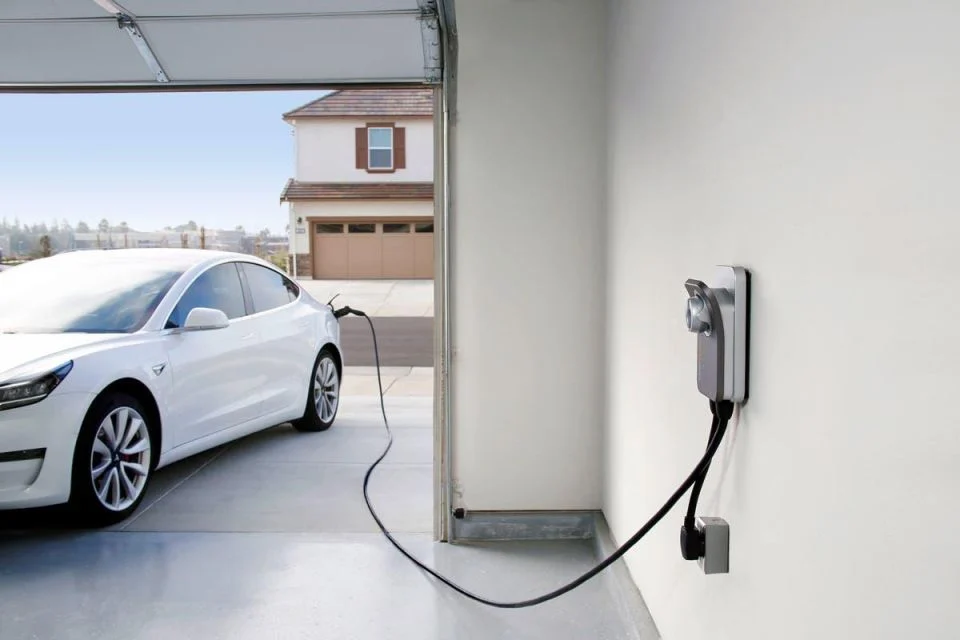
A Level 2 home charger draws from a dedicated 32A circuit and delivers 7kW or more — around 40–50km of range per hour. For most Melbourne homeowners, this means a full overnight charge of 8–10 hours, arriving every morning with a full battery. It’s faster, safer, and more efficient for sustained daily use. This is the charger type we install.
Does installing a home EV charger require a licensed electrician?
Yes — and this is non-negotiable in Victoria. Installing a Level 2 EV charger involves connecting a dedicated 32A circuit to your switchboard, which is classified as electrical installation work under the Electricity Safety Act 1998 (Vic). Self-installation is illegal, voids your charger warranty, and is not covered by your home insurance.
A licensed electrician also issues the Certificate of Electrical Safety on completion — the document you need for your property records and for most Victorian government EV charger rebate applications.
Do you need a switchboard upgrade first?
Possibly — and this is the question most people don’t ask until after they’ve booked a charger installation. A 32A dedicated circuit adds meaningful load to your switchboard. Many Melbourne homes — particularly those built before 2010 — have limited spare capacity in their existing board.
We always carry out a switchboard assessment as part of every EV charger installation quote. If an upgrade is required, we include it in a single combined scope and price. You know the full cost before any work begins.
What’s included in a home EV charger installation?
A complete EV charger installation from Rincon Electrical includes all of the following.
- Switchboard capacity assessment
- Dedicated 32A circuit run from the switchboard to the charger location
- Conduit and cabling installed neatly through the wall or ceiling
- Wall charger hardware supplied and mounted in the optimal position
- Full circuit testing before we leave
- Remote app setup where applicable
- Certificate of Electrical Safety on completion
- Lifetime warranty on workmanship
How much does home EV charger installation cost in Melbourne?
For a standard installation on an existing switchboard with sufficient capacity, home EV charger installation in Melbourne typically starts from $900 to $1,500. This covers the dedicated circuit, the charger hardware, and all installation work. Where a switchboard upgrade is also required, the combined scope is quoted as a single fixed price.
A note on the charger hardware: some homeowners supply their own unit (purchased through their EV manufacturer or a retailer), while others prefer us to supply the hardware as part of the installation. Either way works — we advise on the best charger model for your vehicle and home during the quoting process.
Are there government rebates for home EV charger installation in Victoria?
Yes — Victorian government incentive programs supporting home EV charger installation have been available under the state’s Zero Emissions Vehicle roadmap. Availability and eligibility criteria change, so we advise on the current status of any applicable programs when you enquire. A professionally installed charger with a Certificate of Electrical Safety is required documentation for most rebate applications — another reason to use a licensed electrician.
Which EV brands are compatible with a Level 2 home charger?
All major EVs sold in Australia — including Tesla, BYD, Hyundai IONIQ, Kia EV6, MG, Polestar, Volvo, BMW, Mercedes-Benz EQ, and more — use Type 2 AC charging and are compatible with a standard Level 2 home charger. The Nissan Leaf uses a Type 1 connector and requires a specific charger type — we confirm compatibility as part of the quote.
Can an EV charger be integrated with solar?
Yes, and it’s an increasingly popular combination. A home EV charger paired with an existing solar system can be configured to prioritise charging from solar generation during daylight hours — significantly reducing the grid electricity cost of charging. We assess your existing solar setup and configure the charging management accordingly.
Ready to install your home EV charger? Get a free quote.
